
International Journal of AI and Advanced Computing
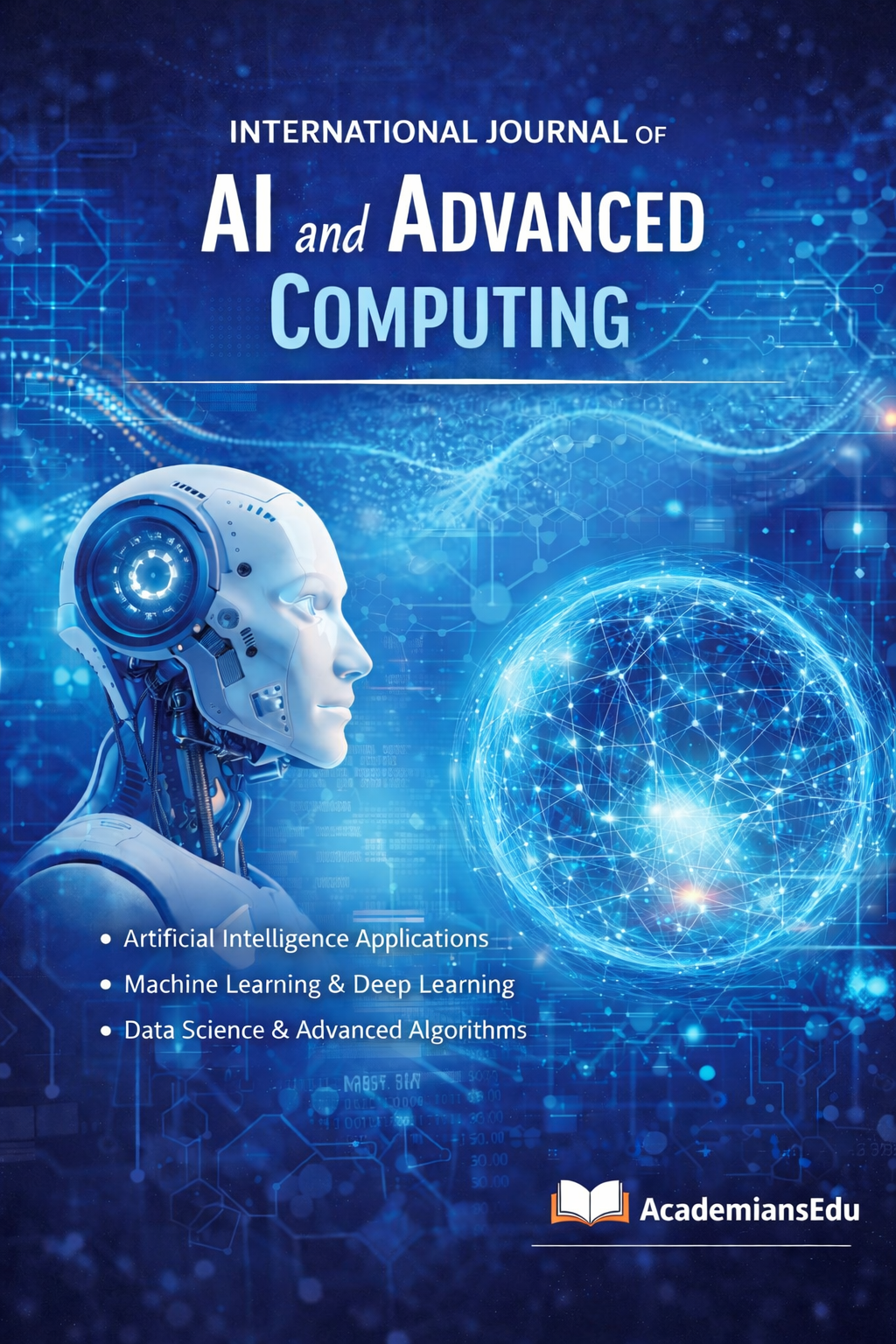
The International Journal of AI and Advanced Computing (IJAAC) is an international, peer-reviewed, open-access scholarly journal dedicated to publishing high-quality research in the rapidly evolving fields of artificial intelligence, advanced computing, and intelligent information technologies.
ISSN: XXXX-XXXX
eISSN: XXXX-XXXX
All articles published in this journal are freely accessible under an open access policy. Authors retain copyright of their work while granting the journal permission to publish.
Aims and Scope
International Journal of AI and Advanced Computing (IJAAC) is an international, peer-reviewed, open-access scholarly journal dedicated to publishing high-quality research in the rapidly evolving fields of artificial intelligence, advanced computing, and intelligent information technologies. The journal aims to provide a global platform for researchers, computer scientists, engineers, and technology professionals to present innovative research, theoretical developments, and practical applications that advance the frontiers of modern computing.
The journal encourages the dissemination of cutting-edge research that contributes to the development of intelligent systems, data-driven technologies, and advanced computational methods that address complex scientific, industrial, and societal challenges. IJAAC particularly promotes interdisciplinary research that integrates artificial intelligence with advanced computing systems, data science, and emerging digital technologies.
The scope of the journal broadly covers major areas of artificial intelligence and advanced computing, including but not limited to the following fields:
Artificial Intelligence and Intelligent Systems
- Artificial Intelligence Theory and Applications
- Machine Learning and Deep Learning
- Neural Networks and Intelligent Algorithms
- Natural Language Processing and Speech Recognition
- Computer Vision and Image Processing
- Knowledge Representation and Reasoning
- Intelligent Decision Support Systems
- Expert Systems and Autonomous Systems
Advanced Computing and Data Technologies
- High Performance Computing and Parallel Computing
- Cloud Computing and Distributed Computing
- Edge Computing and Fog Computing
- Big Data Analytics and Data Mining
- Data Science and Predictive Analytics
- Scientific and Computational Modeling
- Intelligent Data Processing and Information Systems
Computer Science and Emerging Technologies
- Software Engineering and Advanced Software Systems
- Cybersecurity and Information Security
- Blockchain and Decentralized Computing
- Internet of Things (IoT) and Smart Systems
- Human-Computer Interaction and Intelligent Interfaces
- Robotics and Autonomous Technologies
- Quantum Computing and Next-Generation Computing Systems
The journal publishes original research articles, review articles, technical papers, short communications, and case studies that contribute to the advancement of artificial intelligence and advanced computing technologies.
Interdisciplinary studies combining AI, computing systems, data science, and emerging digital technologies are strongly encouraged.
The International Journal of AI and Advanced Computing aims to foster global academic collaboration and knowledge exchange while supporting research that drives innovation in intelligent technologies, advanced computational systems, and the future of digital transformation.
Featured articles
This is overview content.
Archive
Author Guidelines
Before You Start
Authors are encouraged to carefully read the journal's aims and scope before submitting their manuscript to ensure that the research aligns with the journal’s focus and objectives.
For any questions regarding manuscript preparation or submission, please contact the editorial office at: editorial@academiansedu.org
Author Responsibilities
Authors submitting manuscripts to AcademiansEdu journals are expected to:
- Respond promptly to editorial queries during the review and publication process.
- Ensure the accuracy and integrity of all research data.
- Maintain confidentiality of editorial communications until a final editorial decision has been made.
- Ensure that all listed authors have made significant scholarly contributions.
- Acknowledge contributors who do not meet authorship criteria.
In accordance with COPE (Committee on Publication Ethics) guidelines, authors are responsible for the originality, integrity, and accuracy of their work.
Policy on Artificial Intelligence (AI) Tools
AcademiansEdu supports responsible use of Artificial Intelligence tools in academic writing.
- AI tools cannot be credited as authors.
- Authors must disclose the use of AI tools in manuscript preparation.
- AI tools may be used only for language editing or grammar improvement.
- Authors remain fully responsible for the accuracy and integrity of the content.
Research and Publication Ethics
AcademiansEdu follows internationally recognized ethical standards including:
- COPE (Committee on Publication Ethics)
- ICMJE (International Committee of Medical Journal Editors)
Authors must ensure that:
- The manuscript is original and has not been published elsewhere.
- The manuscript is not under consideration by another journal.
- All sources are properly cited.
- Research involving humans or animals follows appropriate ethical guidelines.
All submissions may be screened using plagiarism detection software to ensure academic integrity.
Manuscript Preparation
File Format
- Manuscripts must be submitted in Microsoft Word format (.doc or .docx).
- PDF files may be uploaded for reference but cannot replace the Word manuscript.
Article Length
Articles should normally not exceed 8,000 words, including references, tables, figures, and appendices.
Manuscript Structure
Manuscripts should generally follow the structure below:
- Title
- Author Names and Affiliations
- Abstract
- Keywords
- Introduction
- Literature Review
- Methodology
- Results
- Discussion
- Conclusion
- References
- Acknowledgements (optional)
Abstract
All manuscripts must include a structured abstract with a maximum length of 250 words.
The abstract should include the following sections:
- Purpose
- Design/Methodology/Approach
- Findings
- Originality/Value
Optional sections may include:
- Research limitations or implications
- Practical implications
- Social implications
Keywords
Authors should provide 3–8 keywords that represent the main topics of the manuscript.
Figures and Tables
Figures
- Figures may include charts, diagrams, photographs, or illustrations.
- Acceptable formats include JPEG, PNG, TIFF, and EPS.
- Each figure must include a number and descriptive caption.
Tables
- Tables must be submitted in editable format.
- Each table must include a clear title.
- Tables should be numbered consecutively.
Supplementary Materials
Authors may submit supplementary materials including datasets, multimedia files, additional figures, or software code that support the research findings.
References
AcademiansEdu journals follow the APA 7th Edition citation style.
Example Journal Article:
Smith, J., & Brown, A. (2024). Artificial intelligence in medical diagnostics. International Journal of Clinical Research, 12(3), 45–60.
Example Book:
Porter, M. (2008). Competitive Strategy. Free Press.
Submission Process
Manuscripts must be submitted through the journal submission system or via the official editorial email.
The submission should include:
- Manuscript file
- Cover letter
- Author information
- Ethics approval statement (if applicable)
Peer Review Process
All manuscripts undergo a double-blind peer review process.
Each submission is evaluated by at least two independent reviewers. Editorial decisions may include:
- Accept
- Minor Revision
- Major Revision
- Reject
The typical review period is approximately 3–6 weeks.
Open Access Policy
All AcademiansEdu journals follow a Gold Open Access model.
Articles are freely available immediately upon publication under the Creative Commons Attribution-NonCommercial 4.0 License (CC BY-NC 4.0).
Article Processing Charge (APC)
AcademiansEdu charges a flat Article Processing Charge (APC) of $100 USD for accepted manuscripts.
No fees are charged for:
- Manuscript submission
- Peer review
- Rejected manuscripts
APC payment is required only after a manuscript has been accepted for publication.
Contact Information
For any questions regarding submissions or manuscript preparation, please contact:
Editorial Office
Email: editorial@academiansedu.org
Editorial Team
Editorial board members.
Director
Christopher Alexander Udofia
Department of Philosophy, Akwa Ibom State University, Nigeria
PMB 1167, Uyo
editor@academiansedu.org
Editor-in-Chief
Rizki Wahyudi M.Kom.
Editor in Chief
Institute of Computer Sciences and Engineering (ICSE)
Universitas Amikom Purwokerto, Indonesia
Associate Editors
Astrid Novita Putri
Associate Editor
Department of Informatics Engineering
Universitas Semarang (USM), Indonesia
Dr. Afiyati Afiyati
Associate Editor
Department of Computer Science
Universitas Mercu Buana, Jakarta, Indonesia
Donna Setiawati
Associate Editor
Faculty of Computer Science
Universitas Boyolali, Indonesia
Dr. Muhammad Hafidz Fazli Bin Md Fauadi
Associate Editor
Department of Robotics and Automation
Universiti Teknikal Malaysia Melaka (UTeM), Malaysia
Prof. Ahmed Nabih Zaki Rashed
Associate Editor
Department of Electronics and Electrical Communications Engineering
Faculty of Electronic Engineering
Menoufia University, Menouf, Egypt
Dr. Isagani Mirador Tano
Associate Editor
Associate Professor, Dean
College of Computer Studies
Quezon City University (QCU), Philippines
Indexing & Abstracting
Google Scholar
Indexed
Crossref
DOI Registration
Academia.edu
Academic Network
Future Indexing
DOAJ / Scopus / Web of Science
Reviewer information
Peer review process
AcademiansEdu journals follow a rigorous double-blind peer review process. In this model, the identities of both authors and reviewers remain confidential throughout the review process in order to ensure fairness and unbiased evaluation.
Each submitted manuscript is evaluated by at least two independent reviewers who possess expertise in the relevant research area. Reviewers assess manuscripts based on scientific quality, originality, methodological rigor, clarity of presentation, and overall contribution to the field.
Constructive feedback from reviewers plays a critical role in improving the quality of research and maintaining the academic integrity of our journals.
Mission
The mission of the peer review process at AcademiansEdu is to maintain excellence and rigor in scholarly publishing by ensuring that only high-quality, ethical, and scientifically sound research is published.
Vision
Our vision is to build a global network of expert reviewers who contribute their knowledge and experience to support transparent, reliable, and impactful scholarly communication.
Values
AcademiansEdu values diversity, academic integrity, and constructive collaboration. Our reviewers represent a global community of researchers and professionals who provide thoughtful, respectful, and objective evaluations of submitted manuscripts.
Ethics
All manuscripts and review materials must be treated as confidential documents. Reviewers must not share or discuss submitted manuscripts with anyone outside the editorial process without explicit permission from the journal editors.
Reviewers are expected to disclose any potential conflicts of interest and decline review assignments when such conflicts may affect their impartial judgment.

Resources to guide you through the review process
Discover practical guidance and best practices for conducting high-quality peer reviews. Learn how your expertise can contribute to advancing academic research while supporting authors in improving their work.
More reviewer informationNews
Call for Papers 2025 – Journal of Arts, Humanities and Society
The editorial board of the Journal of Arts, Humanities and Society invites researchers, scholars, and practitioners to submit original manuscripts for publication in the upcoming 2025 issues. We welcome high-quality research articles, review papers, and interdisciplinary studies related to arts, humanities, and social sciences.
Call for Papers 2025 – African Journal of Business, Economics and Management
The African Journal of Business, Economics and Management invites submissions for the 2025 publication cycle. Authors are encouraged to submit innovative research covering areas such as economics, business strategy, finance, marketing, entrepreneurship, and organizational management.